Are Custom Ski Boot Liners Worth the Investment?
Aug 16th 2026
Custom Ski Boot Liners: What They Actually Solve, and What They Absolutely Do Not
Custom ski boot liners are often presented as the final answer to every ski boot problem. Too much movement? Custom liner. Cold feet? Custom liner. Heel lift? Custom liner. Shin pressure? Custom liner. Old boots? Custom liner.
Sometimes that advice is correct. Often, it is incomplete.
A custom liner can be one of the most effective tools in advanced bootfitting. It can improve retention, reduce excess internal volume, increase warmth, sharpen power transfer, and extend the functional life of a well-matched shell. In the right boot, for the right skier, a custom liner can make the entire system feel quieter, more precise, and more connected.
But a liner is not a substitute for shell selection. It is not a corrective device for a fundamentally mismatched boot. It is not a shortcut around proper sizing, stance assessment, foot stabilization, shell work, or technician judgment.
The liner is one component in a performance system. An important one, but not the foundation.
The shell comes first.
Understanding the Role of the Ski Boot Liner
Every alpine ski boot is built around two primary structures: the shell and the liner.
The shell is the rigid plastic chassis. It determines the boot’s last, internal volume, flex pattern, cuff geometry, ramp angle, stance characteristics, and mechanical interface with the binding.
The liner is the internal interface between the skier and that shell. It cushions, insulates, fills space, stabilizes the foot and lower leg, and determines how cleanly the skier’s movements are transmitted into the boot.
This distinction matters.
A skier does not ski the liner alone. A skier skis the relationship between the foot, the liner, the shell, the binding, and the ski. When that relationship is clean, the boot feels precise without feeling punishing. When it is poorly managed, the skier compensates. They over-buckle. They grip with their toes. They collapse through the arch. They sit back. They lose edge control. They blame the boot, the ski, or themselves.
Often, the problem is the system.
A stock liner is designed to satisfy a broad range of feet, legs, and skiing expectations. Even a very good stock liner is still a production item. It must accommodate different ankle volumes, calf shapes, instep heights, heel widths, arch structures, and skier preferences.
That inherent compromise is why custom liners exist.
What a Custom Ski Boot Liner Is Designed to Do
A custom ski boot liner replaces the stock liner with a more specialized internal structure. Depending on the model, it may use dense heat-moldable foam, injected foam, cork composite, reinforced ankle pockets, moldable tongues, or volume-specific construction.
The objective is not simply comfort. The objective is controlled contact.
A proper custom liner should reduce unnecessary movement without creating indiscriminate pressure. It should improve hold without forcing circulation loss. It should make the boot feel more anatomical, but also more mechanically accurate.
The best custom liner does three things simultaneously:
It stabilizes the foot and ankle.
It preserves circulation and functional range of motion.
It improves communication between skier and ski.
That balance is the difference between a boot that feels “tight” and a boot that skis well.
What Custom Liners Do Particularly Well
They Improve Heel and Ankle Retention
Heel movement is one of the most common reasons skiers lose performance inside a boot.
If the heel lifts, the skier loses immediacy. The foot moves first, the boot reacts second, and the ski responds third. That delay shows up as imprecise edging, toe bang, arch fatigue, shin pressure, and excessive buckle tension.
A denser aftermarket liner can create more defined containment around the calcaneus, malleoli, Achilles, and lower leg. This is especially valuable for women, who frequently present with lower-volume heels and ankles relative to the shell shapes available in the broader market.
The goal is not to trap the foot. It is to eliminate unnecessary motion.
They Manage Volume More Intelligently
Many boot problems are volume problems.
A shell may be correct in length but too generous around the ankle. Or appropriate through the forefoot but loose at the heel. Or acceptable on one foot and sloppy on the other. Stock liners can only address these variations to a point.
A custom liner can create a more deliberate fill pattern. It can occupy space where the skier needs support while preserving room where the skier needs circulation, nerve tolerance, or bony relief.
This is where bootfitting becomes technical. More material is not always better. Firmer is not always better. Tighter is not always better.
The question is always: where does this skier need contact, and where does this skier need space?
They Increase Precision
A boot that allows internal movement wastes energy.
The skier may still be able to ski well, but they are working through delay and compensation. Advanced skiers often describe a good custom liner as making the boot feel calmer. Less noise. Less slop. Less lag. Cleaner initiation. More direct pressure.
That precision is not only for racers. It matters for any skier who wants better control, especially in variable snow, steeps, bumps, trees, or high-speed carving.
Precision should not be confused with pain. A performance fit is not a contest of suffering. A proper fit is secure, responsive, and tolerable for the skier’s actual use.
They Can Improve Warmth
Warmth is one of the most misunderstood bootfitting topics.
A warmer liner can help, but cold feet are not always caused by inadequate insulation. They may be caused by compression over the instep, poor circulation, excessive buckle tension, foot instability, thin tissue over bony prominences, inappropriate socks, or a shell that is simply too tight in the wrong place.
That said, certain custom liners, particularly closed-cell foam constructions, can improve thermal performance by reducing empty air space and using materials that retain heat more effectively than many stock liners.
For skiers with chronically cold feet, the liner may be part of the solution. It should not be assumed to be the entire solution.
They Can Extend the Life of a Good Shell
A stock liner will usually deteriorate before the shell does.
As foam compresses and loses structure, the boot begins to feel larger, less responsive, and less supportive. Skiers often respond by tightening buckles, adding thicker socks, or assuming they need a new boot.
Sometimes they do.
But if the shell is still correct, replacing the liner can restore much of the boot’s performance. This is one of the most legitimate reasons to consider a custom liner. It allows a skier to preserve a known, well-fit shell while replacing the component that has actually failed.
What Custom Liners Cannot Fix
This is the part that matters most.
A custom liner cannot fix a bad shell match.
It cannot correct a boot that is too long. It cannot make a high-volume boot perform like a low-volume boot. It cannot eliminate a shell pressure point that needs punching, grinding, or different shell geometry. It cannot solve an instep mismatch by simply adding more material. It cannot make an inappropriate flex pattern ski correctly for the skier.
Most importantly, it cannot compensate for poor boot selection.
A custom liner should refine a fundamentally sound fit. It should not be used to rationalize a fundamentally poor one.
If the shell is wrong, the liner becomes an expensive negotiation with the wrong problem.
Who Should Consider a Custom Liner?
A custom liner makes the most sense for skiers who place meaningful demands on their boots or have fit issues that cannot be adequately resolved with the stock liner.
Good candidates include:
- Skiers who ski 20 or more days per season
- Advanced and expert skiers seeking higher precision
- Skiers with persistent heel lift
- Skiers with narrow heels or low-volume ankles
- Skiers with one foot significantly smaller than the other
- Skiers whose stock liners are packed out but whose shells are still appropriate
- Skiers who over-buckle to create security
- Skiers with cold feet, once circulation and shell pressure have been assessed
- Skiers who want to extend the life of a well-fit boot
- Skiers returning from injury who need a more secure and predictable interface
A custom liner is not only for aggressive skiers. It is for skiers who need a more exact relationship between their anatomy and their equipment.
But it should be prescribed, not assumed.
The Main Types of Custom Ski Boot Liners
There are three dominant categories of aftermarket custom liners: injected foam, closed-cell foam, and cork-based liners. Each has a distinct fit philosophy and performance profile.
Injected Foam Liners
Injected foam liners are among the most precise and unforgiving options in bootfitting.
They use internal channels that are filled with liquid foam while the skier is standing in the boot. The foam expands, cures, and creates a firm cast around the foot, ankle, and lower leg.
When executed well, the result is exceptional retention. The foot is held with very little internal movement, especially around the heel and ankle. This can produce a powerful, immediate connection to the ski.
Injected liners are particularly useful for skiers who want a very high-performance fit, including racers, former racers, instructors, patrollers, and strong technical skiers who tolerate firmness well.
The limitation is that injection is highly technician-dependent. Foam volume, skier stance during molding, shell fit, ankle position, and timing all matter. Overfill can create excessive pressure. Underfill can fail to solve the problem. Once the foam cures, the result is less forgiving than other liner categories.
This is not usually the correct choice for a skier seeking plush comfort. It is a precision tool.
Best For
- High-performance skiers
- Racers and technical skiers
- Low-volume ankle and heel shapes
- Skiers who want maximum retention
- Correct shells that need more structured internal fill
Closed-Cell Foam Liners
Closed-cell foam liners, often associated with Intuition-style constructions, are heat-moldable liners known for warmth, light weight, and volume management.
These liners are heated and molded inside the shell around the skier’s foot and lower leg. As the material cools, it retains the molded shape.
The primary advantages are insulation, adaptability, and support. Closed-cell foam can take up meaningful space, reduce internal movement, and create a more consistent wrap around the foot. It is often warmer than many stock liners and can be an excellent option for skiers trying to revive a shell that still has good underlying geometry.
Closed-cell foam liners come in different volumes and constructions. This is critical.
A thick liner in a shell that is already snug can create compression, circulation problems, and instep pain. A lower-volume liner in a roomy shell may not provide enough correction. The liner has to be selected according to the shell and the skier, not simply by brand reputation.
Wrap vs. Tongue Construction
A tongue-style liner preserves the more traditional feel of a ski boot. It usually offers easier entry and exit and tends to maintain a familiar flex pattern.
A wrap-style liner overlaps around the shin instead of using a separate tongue. It can increase warmth, improve lower-leg contact, and make the boot feel slightly more supportive or stiffer. It can also alter the way the boot flexes, which may be beneficial for some skiers and problematic for others.
Neither construction is universally better. The correct choice depends on lower-leg shape, shell design, flex preference, skiing style, and the specific problem being solved.
Best For
- Skiers with cold feet
- Skiers needing volume reduction
- Packed-out but otherwise appropriate shells
- Recreational to advanced skiers wanting warmth and support
- Certain touring, hybrid, and alpine applications depending on model
- Skiers who want more structure without the rigidity of injected foam
Cork-Based Liners
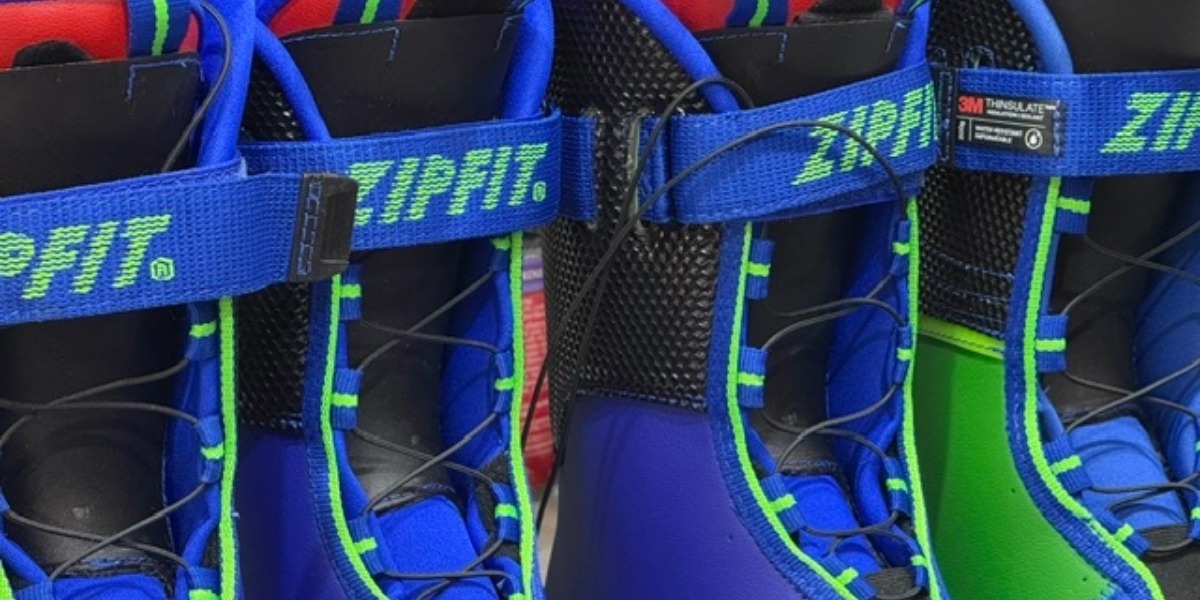
Cork-based liners, most commonly associated with ZipFit-style constructions, use a moldable cork composite in strategic zones around the heel, ankle, and tongue.
Cork behaves differently than foam. It does not pack out in the same way. It remains dense, supportive, and malleable under heat and pressure. Over time, it continues to migrate and settle around the skier’s anatomy. In many models, additional cork can be added or redistributed to refine the fit.
The result is a liner that can be exceptionally durable and precise.
Cork liners are particularly valued by frequent skiers because they maintain structure over a very long lifespan. They provide a dense, connected feel without the same one-time risk profile as injected foam.
They are not always instantly comfortable. A cork liner may require heat, ski time, and technician adjustment before it reaches its best fit. It is a premium option for skiers who understand that break-in and refinement are part of the process.
Best For
- Frequent skiers
- Advanced and expert skiers
- Skiers who want long liner life
- Persistent heel and ankle hold issues
- Skiers who prefer a dense, precise interface
- Well-matched shells that deserve a performance upgrade
Custom Liners vs. Custom Footbeds
A custom liner and a custom footbed are not interchangeable.
A custom footbed stabilizes the foot from underneath. It supports the arch, controls excessive movement, improves alignment, and creates a consistent platform inside the boot.
A custom liner stabilizes the foot and lower leg from the sides, back, and top. It manages volume, containment, warmth, and contact with the shell.
A skier with an unstable foot may not get the full benefit of a custom liner without proper foot support. If the arch collapses, the heel rotates, or the forefoot splays excessively, the liner is being asked to manage movement that should be controlled from below.
The hierarchy matters:
- Correct shell
- Correct size and volume
- Proper foot support
- Shell modification where needed
- Liner refinement
Skipping steps rarely saves money. It usually just delays the real solution.
When the Stock Liner Is the Right Answer
Not every skier needs a custom liner.
Modern stock liners in well-made boots can be excellent. Many use heat-moldable materials, anatomical ankle pockets, reinforced tongues, improved insulation, and supportive foam packages.
A stock liner may be entirely appropriate if the boot fits well, holds the heel securely, preserves circulation, and matches the skier’s performance expectations.
A skier who skis a handful of days per year, stays mostly on groomed terrain, and is comfortable in a properly selected boot may not gain enough from a custom liner to justify the cost.
That is not a downgrade. That is good fitting. The best bootfitting recommendation is not always the most expensive one. It is the one that solves the actual problem.
Signs Your Liner Is Packed Out
A packed-out liner loses its ability to hold shape, manage volume, and transmit energy effectively.
Common signs include:
- You are tightening buckles more than you used to
- Your heel begins to lift
- Your toes hit the front of the boot
- Your foot slides side to side
- The boot feels less responsive
- Your shin moves inside the cuff
- You develop new pressure points
- You feel more foot fatigue
- The boot feels roomy even with appropriate socks
If these symptoms appear in a shell that once fit well, the liner may be the failing component.
If these symptoms have been present from the beginning, the shell may have been wrong all along. That distinction is critical.
The Bottom Line
A custom ski boot liner is not a comfort upgrade in the casual sense. It is a fit and performance intervention.
Used correctly, it can improve retention, warmth, precision, stance consistency, and shell longevity. It can solve specific problems that stock liners cannot. It can make a well-selected boot feel significantly more exact.
Used incorrectly, it can mask poor shell selection, create new pressure, reduce circulation, and add unnecessary cost.
At outdoor DIVAS, we view custom liners through the same lens as the rest of bootfitting: anatomy first, shell first, skier first. The liner is selected only after the underlying boot system is understood. A custom liner should make a good boot better. It should never be used to make the wrong boot seem right.
Why Trust outdoor DIVAS?
At outdoor DIVAS in Vail, Colorado, we've specialized in women's ski boot fitting for more than 20 years. Our experienced bootfitters work with every foot shape and ability level, helping thousands of women find boots that ski better because they fit better.